Ecler WARM4 and WARM2 Review by David Michael of Passionate DJ.
Introduction
WARM stands for Warehouse Analogue Rotary Mixer, which should tell you a lot about what these products are.
Ecler (a company based out of Barcelona) is no stranger to building analogue mixers. They’ve done so since the 1960s.
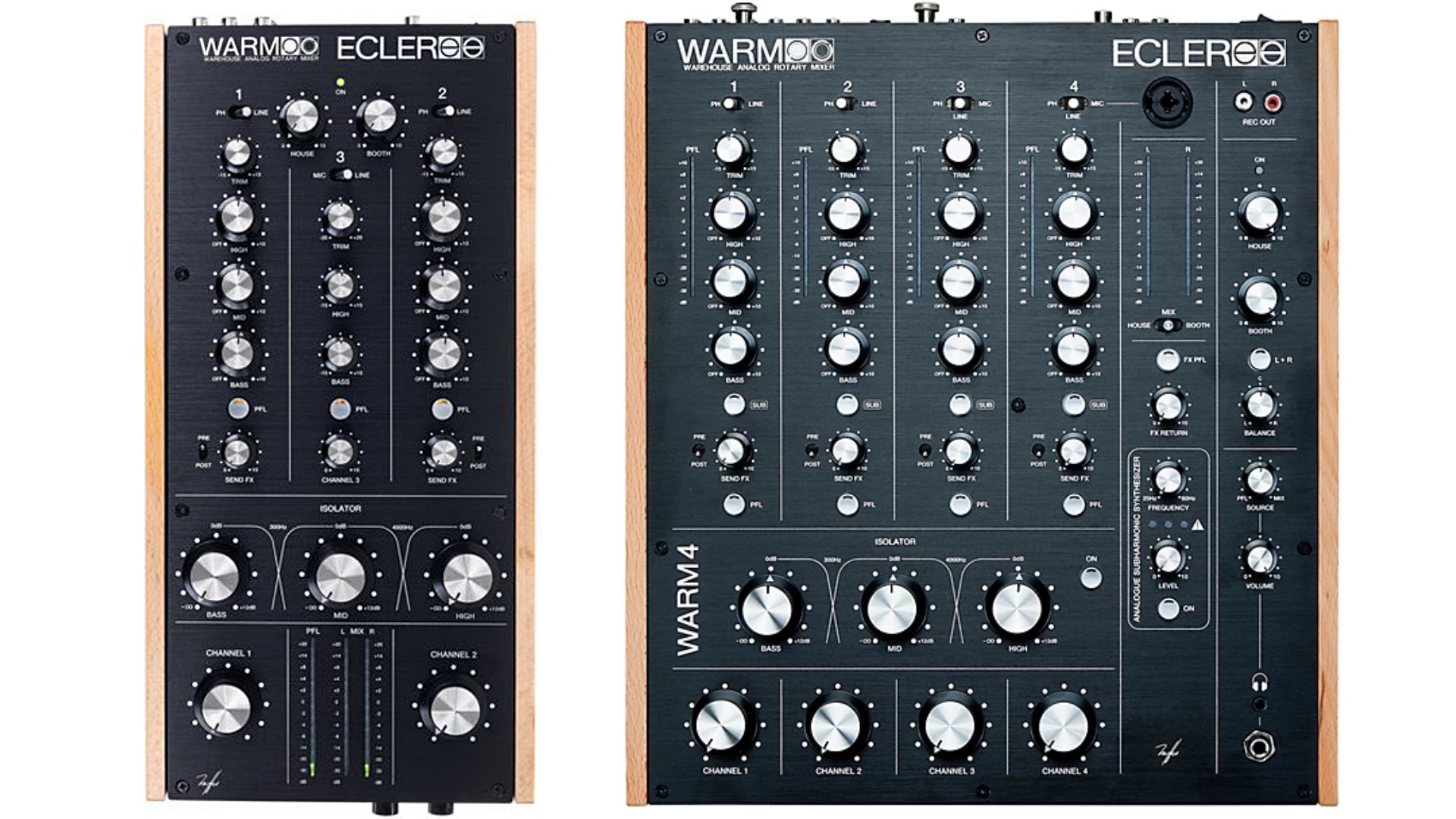
These aren’t your typical DJ mixers, if what you’re used to seeing is a set of faders and a USB port.
They don’t connect to your laptop via Serato, they don’t have built-in sound cards, and they don’t have FX.
Rotaries are for DJs that like making long-blends over the period of many seconds (or even minutes). They’re meant for intricate, delicate performance.
Use a WARM2 or WARM4 like the scalpel it is, and you’ll be rewarded with great sound and an intimate mixing experience.
Features & Layout
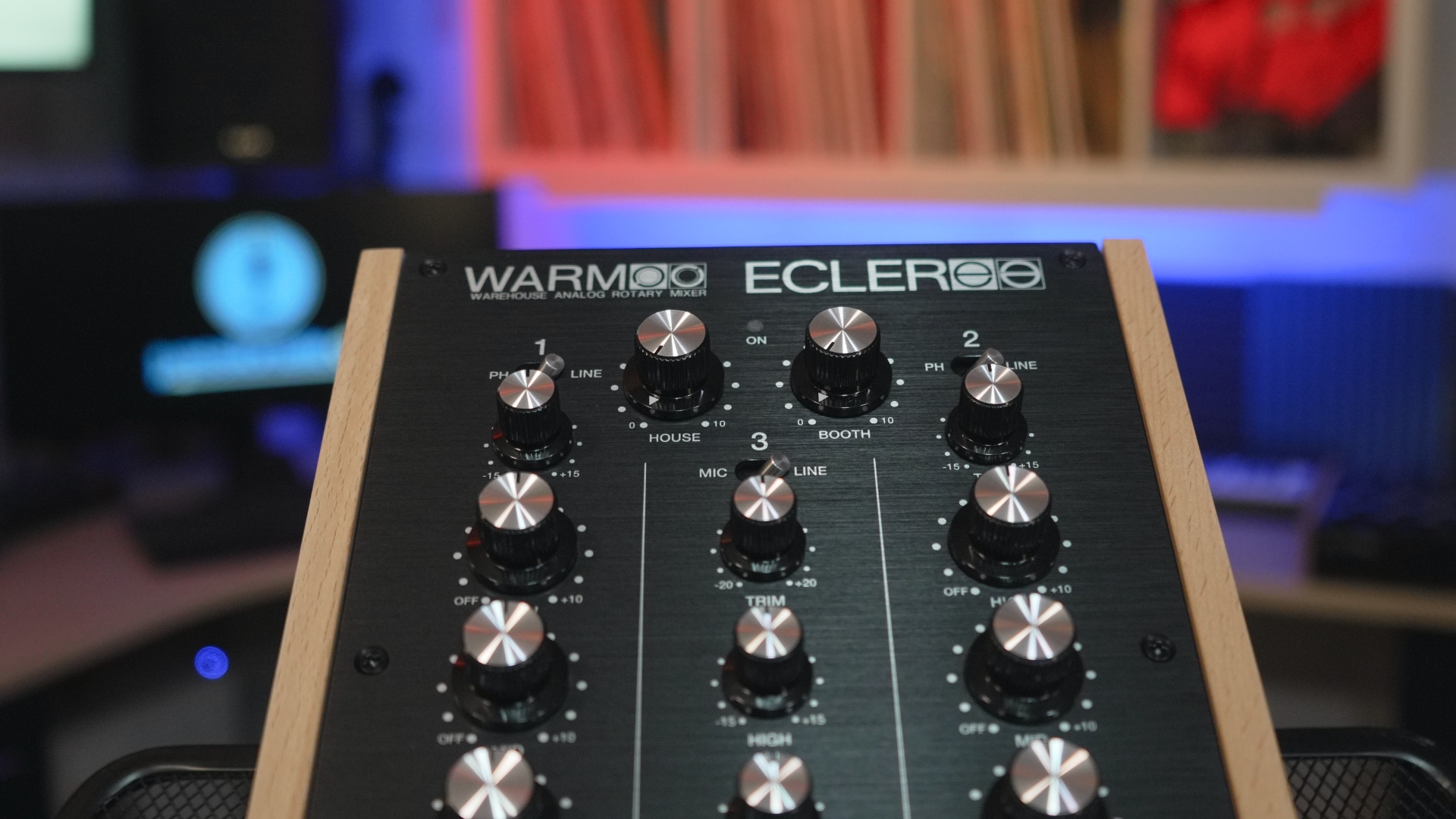
When looking at the top of the WARM2 and WARM4, you won’t find a single fader or slider. Everything that isn’t a spinning knob is a mechanical switch, button, or jack.
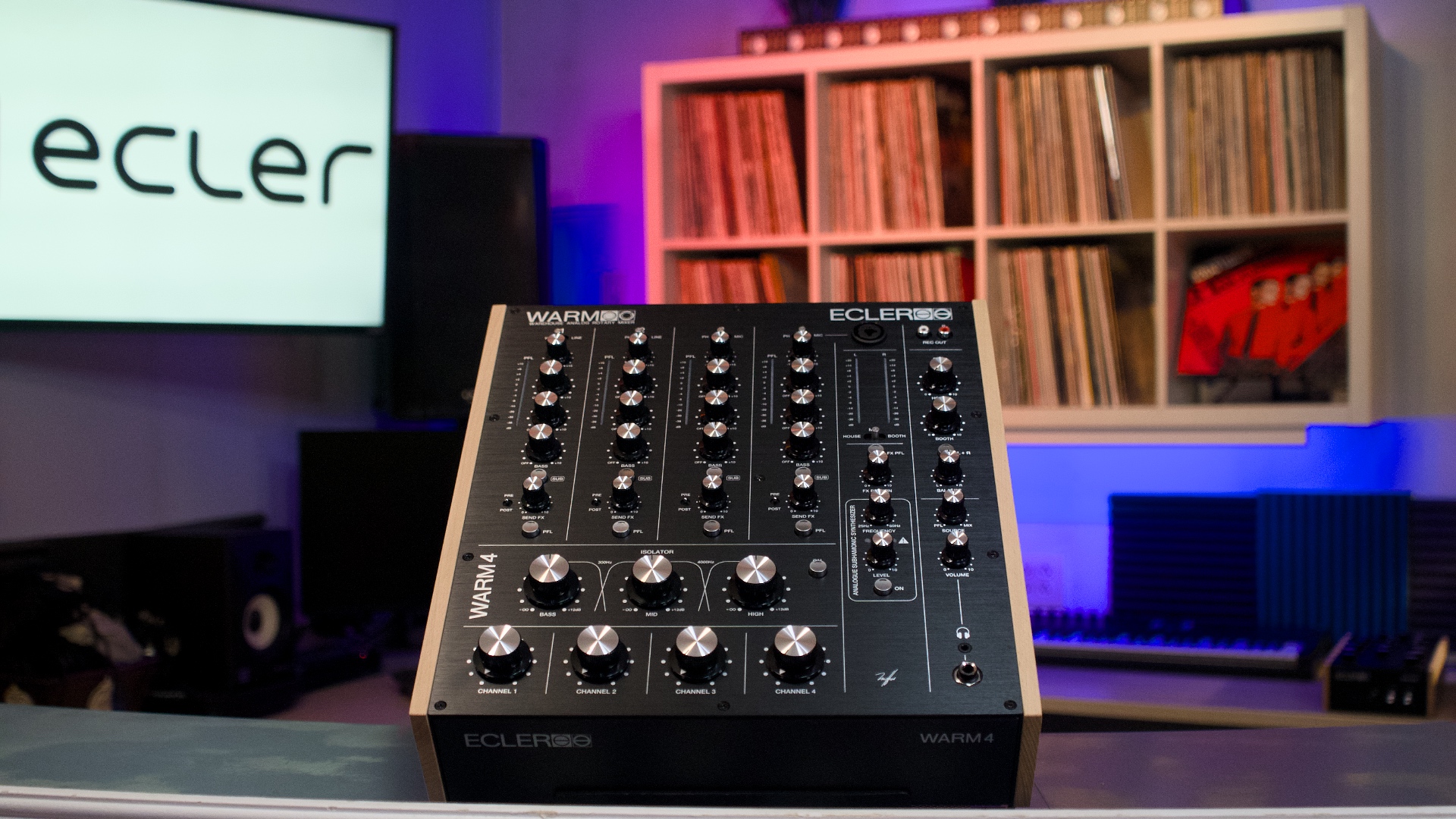
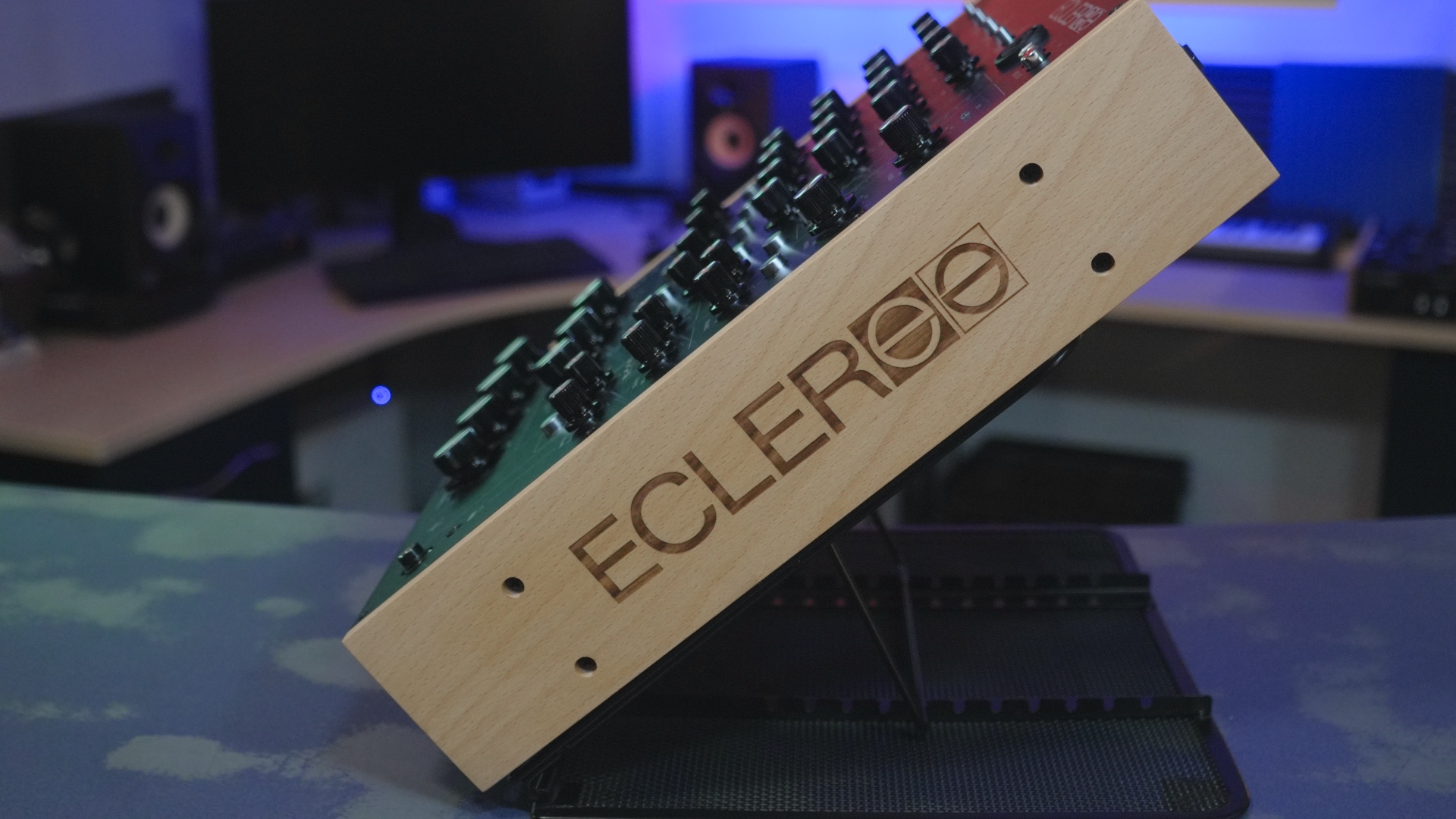
Both mixers are pleasing to the eye, with wooden side panels and chunky aluminum knobs displaying an aura of old-school elegance. They look stately, without being gaudy.
I’m a sucker for a mixer that looks like it belongs in a high-end studio.
Immediately, the layout makes sense. Everything is clearly labeled and well-spaced. Any experienced DJ will know their way around.
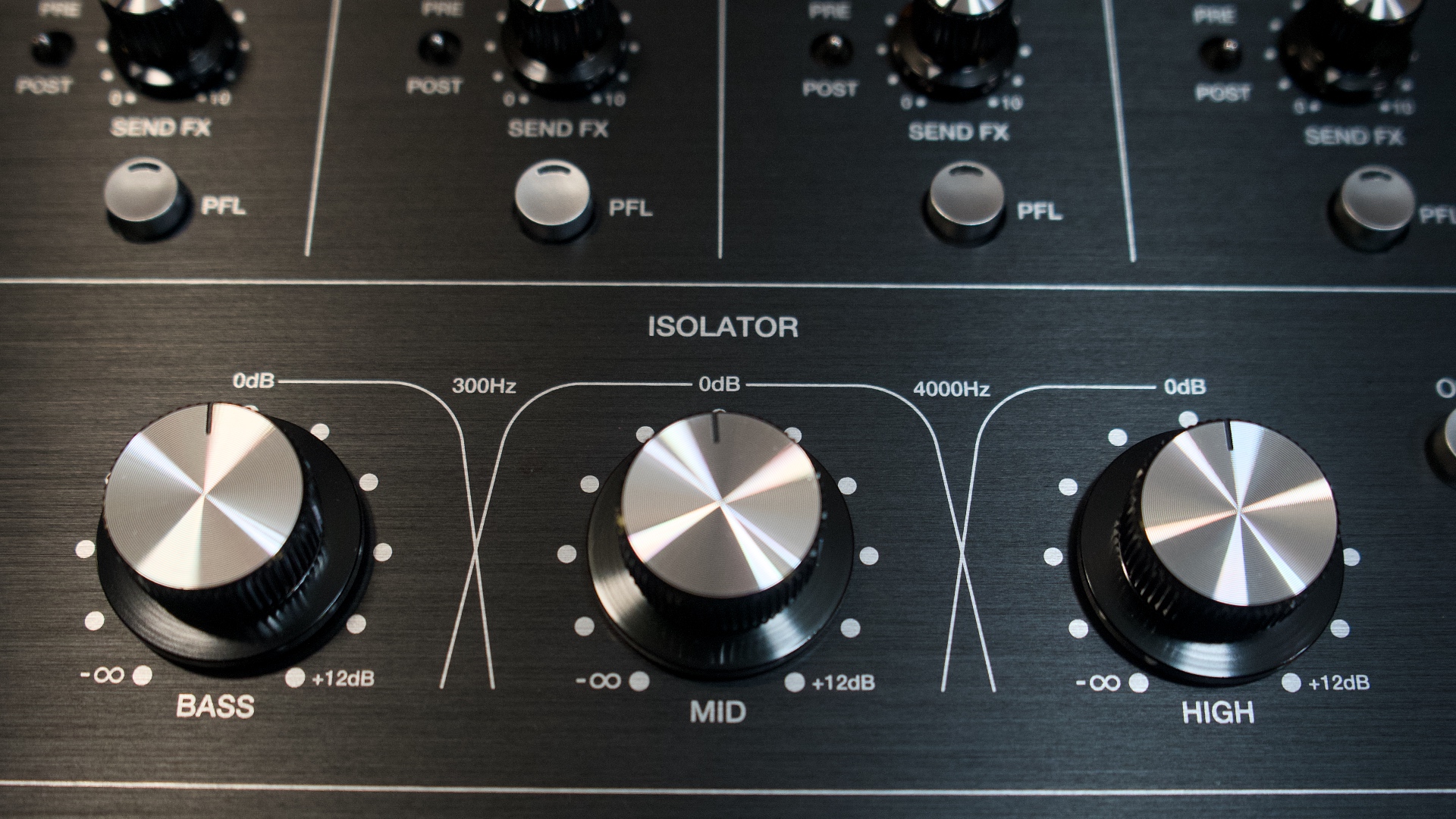
EQ & Isolator
Across the top of the channels, you’ll find a 3-band EQ with a full cut. This helps each song blend together nicely in the mixing bus, without muddying up the mix.
Lower on the mixer (above the channel encoders) you’ll find a 3-band master isolator (4th order 24dB/oct slope). Use this for dramatically shaping the sound to fit the environment you’re playing in. Or, for adding dramatic builds or drops to the entire mix output.
All this makes for a very precise mixing instrument. The goal with the EQs isn’t to color the sound, but to give you the tools to slice and blend it all together.
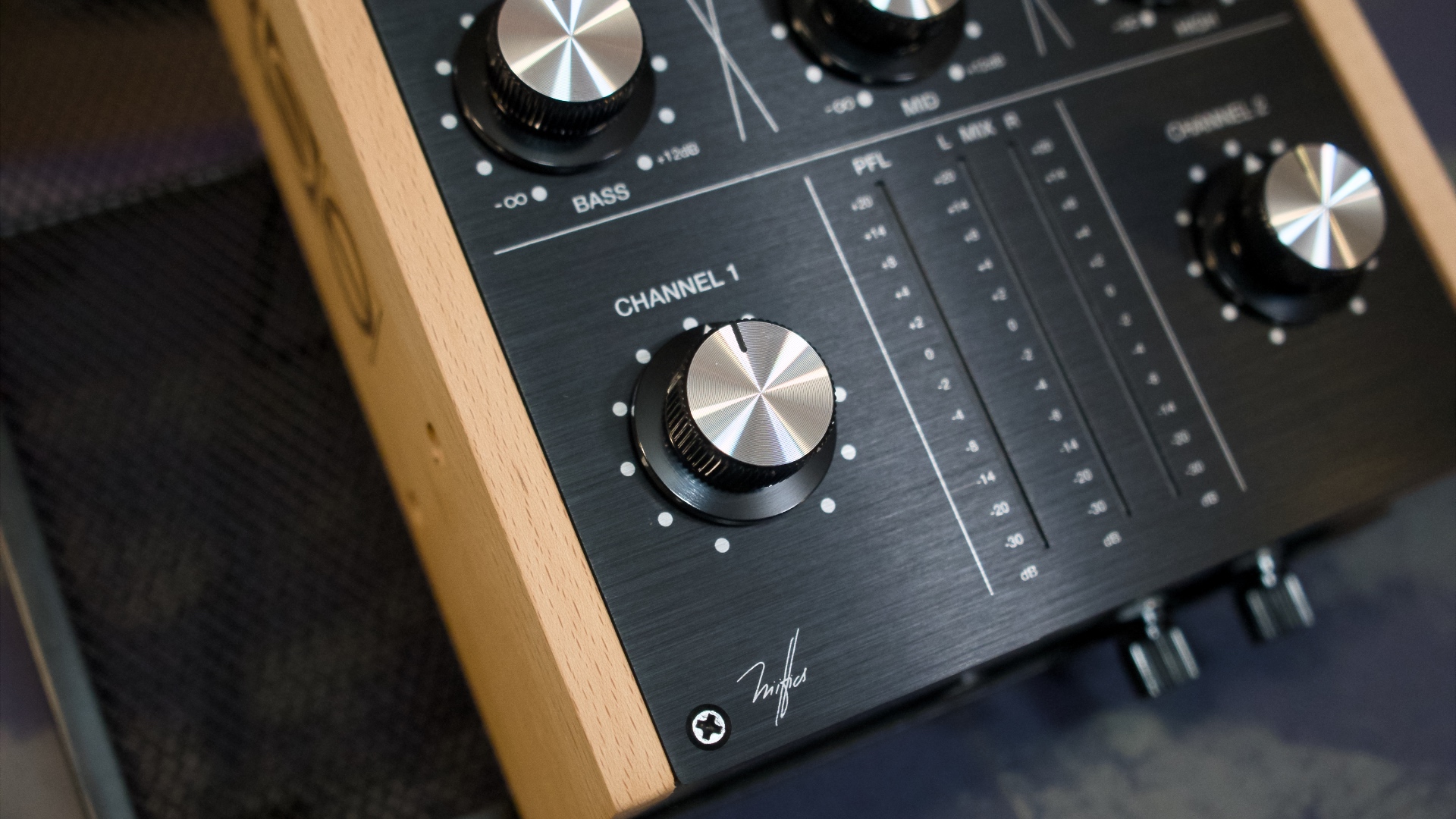
Rotary Encoders
Underneath all the larger knobs are Alps Blue Velvet potentiometers. These components are well known for their price:performance ratio, and make for a heavy turning feel. They can be commonly found in higher-end audiophile gear.
The overall “heavy” feeling of this mixer suits it well. It makes the WARM mixers feel like premium products, while rewarding slow and methodical blending.
Analogue Subharmonic Synthesizer
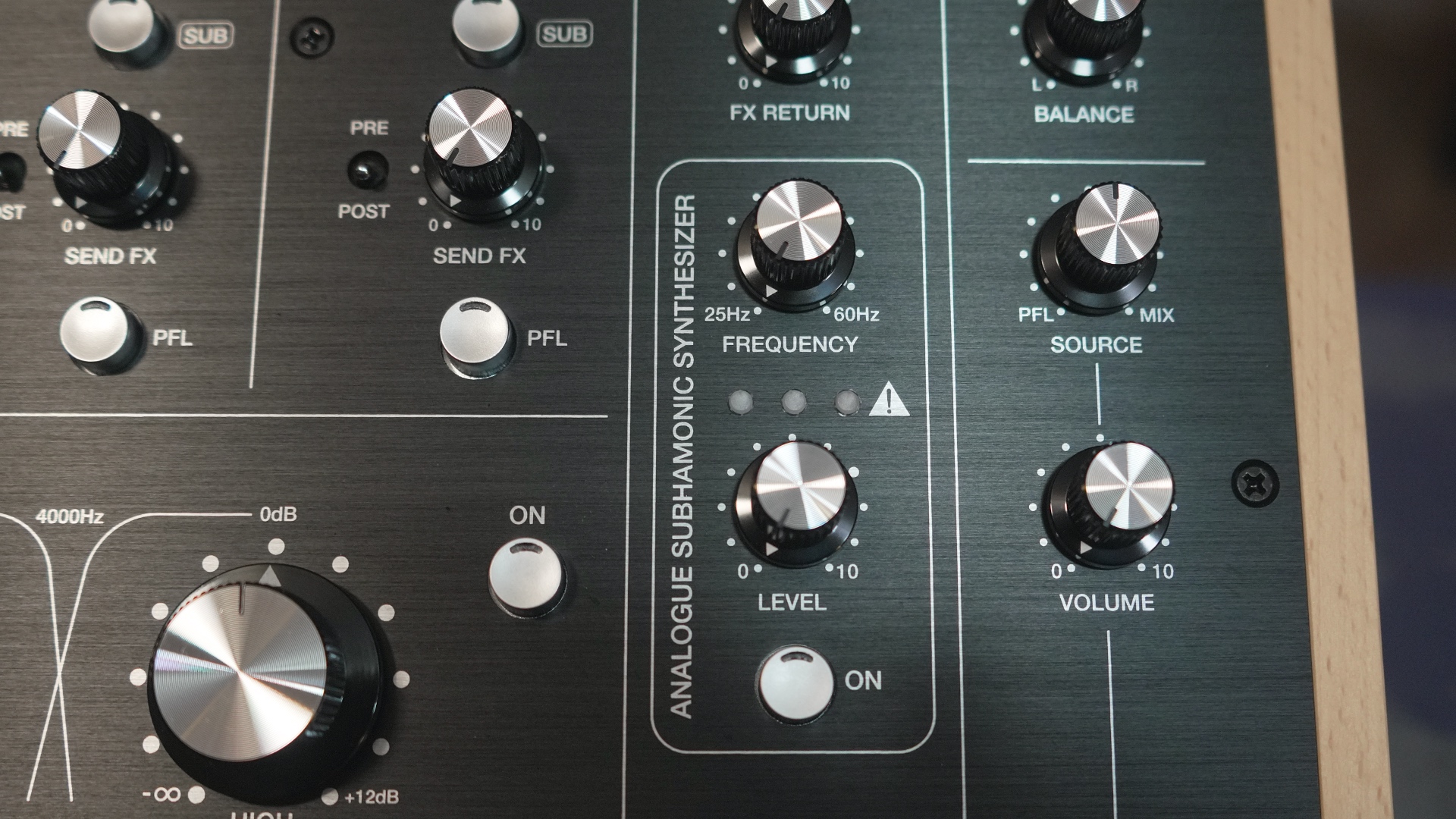
(WARM4 Only) A subharmonic synth is a circuit which analyzes the lower frequencies of an audio signal, and adds its own synthesized undertones.
Put simply, it makes the bass hit harder.
The Frequency knob lets you adjust the affected range, with a Level knob to help keep you out of the red zone. Luckily, it has its own 3-LED VU meter.
This is a powerful tool – use it with caution. In the right hands, it’s a magical tool that can make old records sound new again. In the wrong hands, it can damage speakers or eardrums.
Ports & Connections
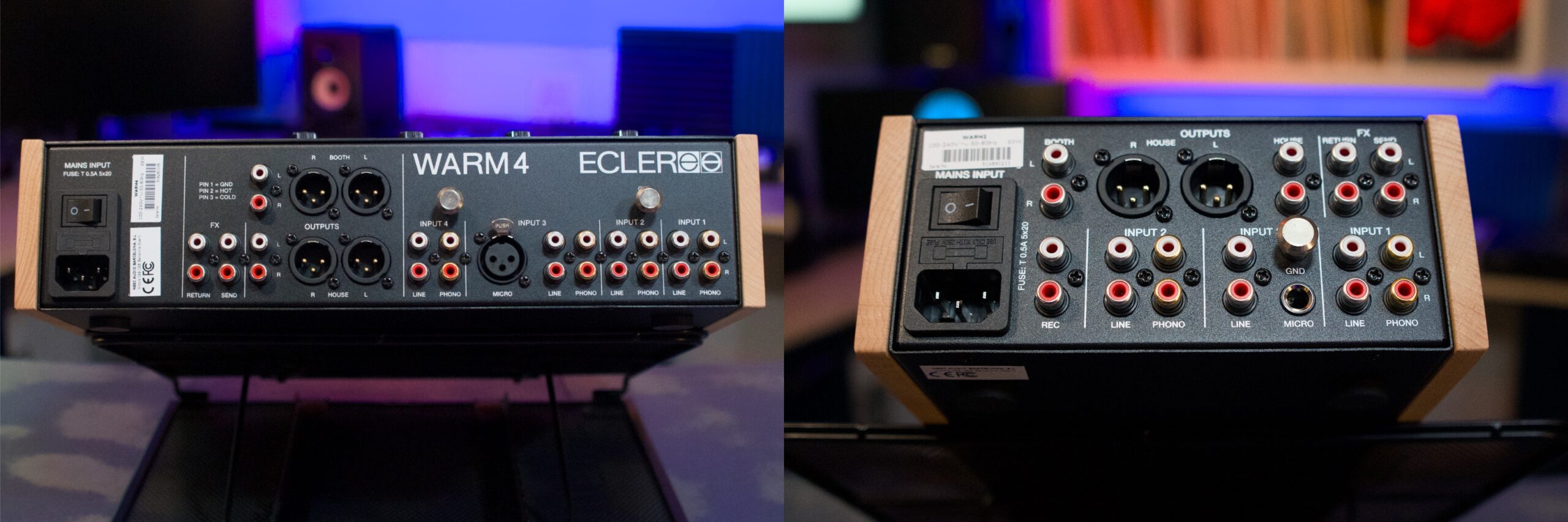
- Ecler WARM2
- Inputs: 3 line, 2 phono, 1 mic (¼” balanced)
- Outputs: Master Out (XLR + RCA), Booth (RCA), Record Out (RCA), headphones jack (6.3mm) + mini-jack (3.5mm)
- Send/Return via RCA jacks
- Ecler WARM4
- Inputs: 4 line, 4 phono, 2 mic (1 XLR, 1 TRS/XLR combo)
- Outputs: Master Out (XLR + RCA), Booth (XLR + RCA), Record Out (RCA), headphones jack (6.3mm) + mini-jack (3.5mm)
- Send/Return via RCA jacks
The WARM2 could be considered a 2 + 1, or “two and a half channel” mixer. The third channel is selectable between Mic and Line.
This means you could realistically connect another source here (such as a CDJ). However, it limits you to a two-band EQ, no FX send, and the loss of your mic during use.
One notable missing feature on both mixers is split-cue (the ability to separate the cue/master signal to L and R in your headphones).
Send & Return
Both mixers rely on a Send/Return loop for FX. Which is to say, you must bring your own. Connect an FX box, guitar pedal, etc. via RCA jacks.
It was a little odd to see them as RCA jacks instead of ¼” TRS, but it’s easy enough to convert with the right cable or adapter.
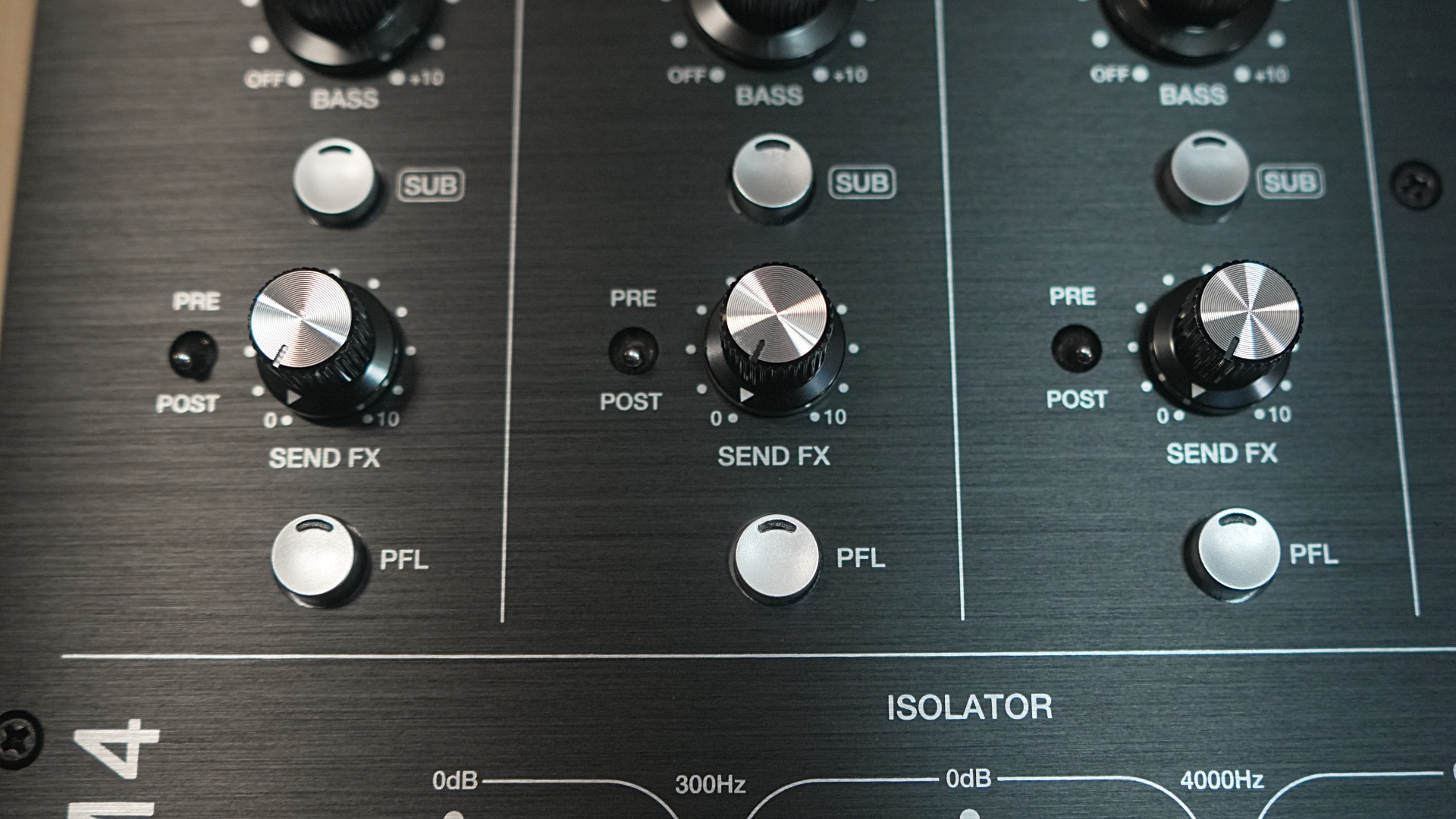
Each channel has a Send FX knob, which allows you to adjust the amount of signal you’re send-ing. In the case of the WARM4, you also get an FX return level on the Master.
A pre/post fader selection allows you to decide whether you’re sending the signal as identified by your current fader level, or the full signal at all times.
Sound Quality & Character
While testing the WARM mixers, I experienced an organic sound pleasing to the ears. Channel summing is buttery smooth, and the output is lively.
I listened to a variety of vinyl records while testing:
- Gary Numan – Telekon (a worn record from the early 80s with weird synths)
- Aaliyah – I Care 4 U (a slow R&B track from 2003)
- Deftones – Minus Blindfold (a messier, brighter rock track)
- Joris Voorn – Blank (a prog house favorite)
The Master Isolator and channel EQs present an opportunity to give these old songs a boost, to help them compete with modern tracks in the mix.
I found that a small “disco smile” (a boost of the LOW and HI at about the 2 o’clock position) added a pleasing overall boost.
But the real magic happens with the Analogue Subharmonic Synthesizer on the WARM4.
On the Gary Numan track, it brought this old worn-out record back to life in the low-end. The subwoofer wakes up, making it sound much more like a modern track.
Using this feature, I started to “feel” these tracks in a way that I didn’t when it was turned off.
The effect is not subtle. It could certainly be abused in a way that’s literally dangerous. Use with care, but use it. It’s magic.
In every case, subtle use of these features rewarded me with improved clarity and punchiness. There were moments where it felt like a second subwoofer turned on.
More of my thoughts on sound quality and vinyl testing in the video above.
WARM2 vs. WARM4
When comparing these two mixers, there’s more to discuss than the number of channels.
The Analogue Subharmonic Synthesizer is on the WARM 4 only, and should be considered a huge selling point for this mixer in particular.
You must perform all channel monitoring on the WARM2 through a single LED VU meter. Each channel has a PFL button (pre-fader listening, or “cue”). Whatever signals are toggled with this button are combined and shown on a single meter.
Conversely, the WARM4 has individual channel meters which work at all times. This is what most of us are used to. And for good reason: it’s way easier to keep an eye out for red lights.
The WARM4 also has a master FX return with its own control, which is missing from the WARM2. You can monitor this FX return (selectable with button) to hear what you’re about to push out to the speakers.
The WARM4 also has a Balance Knob which is not present on the smaller mixer, and is able to bypass the isolator with a button.
Finally, there are small differences in circuitry. Ecler made a few audio improvements on the WARM4 over the earlier-released WARM2. This includes tweaks to signal-to-noise ratio, total harmonic distortion, etc. (find the specs here and here).
In my limited time with these mixers, I attribute any drastic sound quality difference to the use of the Analogue Subharmonic Synthesizer.
That said, there is about a $900 difference between these two mixers. Which is why it’s important to consider the entire picture: it’s more than just the amount of inputs.
Wrapping Up
The Ecler WARM2 and WARM4 are classy, hand-built, clean-sounding, no-frills DJ mixers.
I could easily split hairs over what kind of DJs like these mixers, and what genres they’re ideal for.
It’s easier to say who these mixers are not for: scratch DJs, laptop DJs, crossfader users, or anyone with a manic mixing style.
The truth of the matter? The market for rotary mixers is: rotary mixer fans.
The Ecler WARM line splits the boutique mixer market down the middle, in regards to price, sound quality, and build quality. Actually, some shoppers will consider it a bargain compared to the competition.
Aesthetically speaking, I was very happy to see these mixers in my studio. The combination of wooden trim sitting alongside the spartan and mechanical design of the top plate makes me happy.
There’s a fine line between “hand crafted” and “built in someone’s basement”, but these mixers have no issue presenting themselves as high-end.
If you mix records from a variety of genres and time periods, these mixers could be a lifesaver for you.
The WARM2 and WARM4 are outstanding rotary mixers for the money. Order with confidence – and get yours from The DJ Hookup!